

Big Island has long been valued for its wealth of timber, coal, and gold. By the early 20th century, it had become a favorite recreational spot for Edmonton residents and was eventually transformed into a park. Learn more about its fascinating history on edmonton.name.
A Source of Timber, Coal, and Gold
Edmonton, a city shaped by the North Saskatchewan River, was originally a trading post integrated into the prairie’s vast network of waterways. The river’s influence runs deep in the city’s history.
In the 1880s, Big Island, located 16 miles from Edmonton, became an important source of timber. Its convenient location allowed for easy logging and transportation downstream. A narrow channel between the island and the western shore served as a storage area for logs. John Walter, one of Edmonton’s prominent entrepreneurs, recognized the island’s value and purchased the lumber operation in 1895. By the following year, one of Walter’s companies had harvested 300,000 feet of timber, which was sent downstream to his sawmill. Big Island continued to supply materials for many of Edmonton’s early buildings until the 1920s.
Coal was another valuable resource, and as demand increased, mining operations expanded along the banks of the North Saskatchewan River. The first coal pit on Big Island was opened in 1881. The river’s accessibility made it easy to transport coal by boat. The island’s rich coal deposits were actively mined during the 1880s and 1890s.
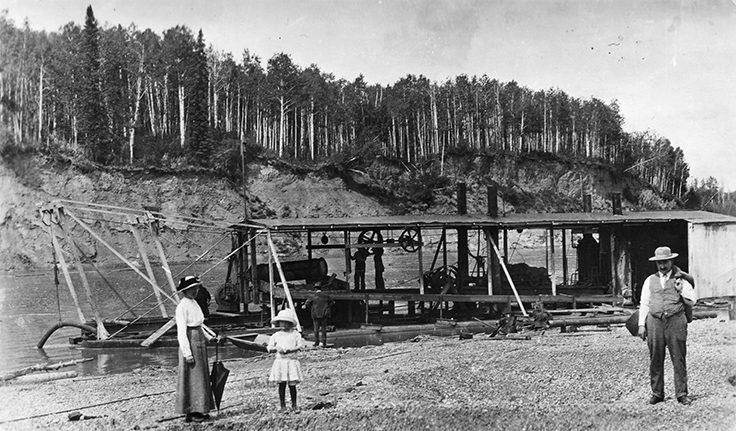
Gold was also found in the sand and gravel deposits along the North Saskatchewan River. Although the scale of prospecting never reached the heights of the Klondike Gold Rush, some miners made a decent living extracting gold from river sediments. Early operations relied on manual labor, but steam-powered dredges were later introduced. By 1899, nine companies operating 15 dredges were mining in the Edmonton area. On Big Island, a dredge powered by two 20-horsepower engines worked in the southern channel. Dredging operations on the island continued into the early 20th century.
From Island to Park
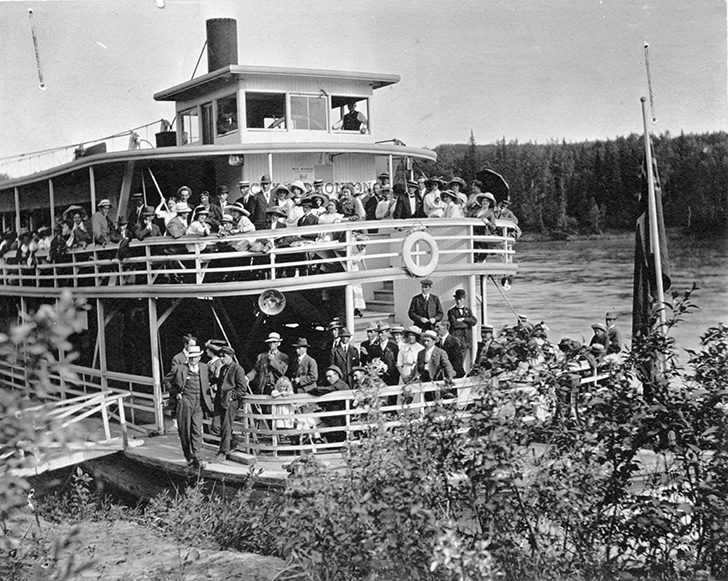
The advent of steamboats revolutionized river transportation and turned Big Island into a popular recreational destination. In the 1890s, steamboats ferried visitors to the island for excursions. By the following decade, the popularity of these outings had grown significantly. During the summer, steamboats transported goods on the North Saskatchewan River five days a week and carried passengers seeking nature escapes on weekends and holidays.
The journey from Edmonton to Big Island took three hours. The island’s old poplar forest and diverse flora and fauna provided the perfect setting for outdoor activities. Visitors enjoyed picnics, games, and competitions. As evening fell, they boarded waiting steamboats for a lively return trip featuring local musicians who entertained passengers under the stars. Over the years, the island hosted various events organized by churches, schools, and unions.
In 1911, John Walter purchased Big Island from the Dominion Government and launched two steamboats to enhance the island’s appeal as a summer resort. He built a large pier and planned to construct a pavilion. These excursions created idyllic memories until the young city faced challenges.
The outbreak of World War I and a devastating flood in 1915 caused significant losses and uncertainty. Although visitors continued to travel to the island, Walter’s business collapsed, and his ships were left to decay along the riverbanks.
Big Island Today
In 2023, Big Island was officially designated a provincial park, with $9.6 million in government funding allocated for its development. The park now covers approximately 80 hectares and serves as a sanctuary for wildlife. Its mature forests and ecologically significant wetlands support a diverse range of birds and mammals, including bald eagles, mallards, moose, coyotes, porcupines, and more.
Big Island Provincial Park stands as a testament to Alberta’s rich history, offering visitors a chance to connect with nature while preserving a vital part of Edmonton’s past.