

Edmonton, one of Canada’s most beautiful cities, is steeped in history and surrounded by natural beauty. The city’s administration has always prioritized its rivers and lakes. While some bodies of water still exist, others are only remembered through historic landmarks. One such lost gem is McKernan Lake. More on edmonton.name.
How the Lake Formed
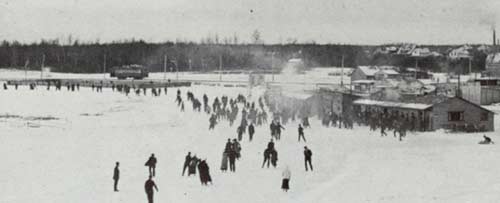
McKernan Lake is no longer visible, but its “ghost” can still be traced on old maps, revealing its location and the homes once built on the hills surrounding it. This lake and Lendrum Creek once covered approximately 30 acres and were connected by a natural artery.
The first settlers of the lake area were the Papaschase Cree, who were later displaced to the southern part of Edmonton. McKernan Lake served as a home not only for the Papaschase but also for wild ducks nesting along its shores. It provided the community with fish and game, as locals hunted the birds that thrived there.
In 1874, the Papaschase were further displaced to Enoch. Settlers began constructing homes near the lake. However, a devastating flood struck when heavy rains caused the lake’s water level to rise by 12 feet, flooding nearby homes. This led to the decision to partially drain the lake.
Situated beneath ten city blocks, from 110th to 114th Streets and southward from 76th Avenue to 72nd Avenue, McKernan Lake was part of a land parcel south of University Avenue. This land was purchased by Robert and Sarah McKernan, who had traveled from Ontario in a covered wagon in 1878.
The McKernan Family
Robert and Sarah McKernan lived in a log house near the site of today’s McKernan School. They led a quiet life, raising ten children. Robert owned land in what is now Belgravia and established several businesses, including the Dominion Hotel. He taught his son the ropes of business, and together they opened the Princess Theatre. Robert also served as president of the Strathcona Agricultural Society and played a leading role in the Orange Order.
Recreation and Draining the Lake
McKernan Lake was a popular recreation spot. Events and parties were held there, and an Orange Hall was built nearby. By November 1913, a streetcar line ran along 76th Avenue to 104th Street and the North Saskatchewan River, making it easier for Edmonton’s 63,000 residents to reach the lake year-round.
However, the streetcar tracks were built without gravel reinforcement, often causing the car to derail into the lake’s mud. Drivers had to disconnect and reconnect the trolley wires frequently.
In winter, locals skated, sledded, and played hockey on the frozen lake. Tents were pitched, fireworks launched, and the Strathcona city orchestra provided live music for evening skating parties. In summer, visitors enjoyed boating, picnicking, and hiking.
In 1920, a small wooden pump station was built on 75th Avenue to redirect water into the sewage system, preventing further flooding.
By 1930, the lake was completely drained. The city decided to use the reclaimed land to build 150 homes. Water from the lakebed was diverted through a series of ditches to the University Farm.
Interesting Facts
Though the lake is gone, memories and reminders of its existence remain in the McKernan and adjacent Belgravia neighborhoods. Before the war, two blocks north of 76th Avenue, between 115th and 118th Streets, were a market garden operated by two Chinese men.
On the western edge of the former McKernan Lake, the Belgravia Arts Park boasts one of Edmonton’s largest displays of native plant species. This public garden, located at 73rd Avenue and 115th Street, is maintained by community volunteers.
A few homes that predate the disappearance of McKernan Lake still stand today, including a historic farmhouse.