

“Omaka Tye,” “Beaver,” “Cree”—did you know that all of these names are directly related to the river that flows through the heart of Edmonton? This river is not only a natural landmark of Alberta but also a vital artery of Canadian history and culture.
Historically, rivers have not only served as beautiful natural landmarks but also played critical roles as strategic resources. They have provided food, supported transportation, and connected communities. However, what most Edmontonians know about the North Saskatchewan River is often just the tip of the iceberg. Today, let’s take a deep dive into the depths of the North Saskatchewan River and uncover some of its hidden secrets. More on edmonton.name.
Historical and Geographical Highlights

It is hard to find a resident of Edmonton who hasn’t seen the iconic High Level Bridge spanning the river or perhaps even sailed beneath it on a boat or canoe. The river’s significance to the region dates back centuries.
The earliest recorded mention of the river dates to 1760, when it was marked on a map of the Hudson Bay Company as “Beaver River.” Over centuries, this waterway became a lifeline for fur trading, with some records suggesting that for over 10,000 years, it sustained the First Nations communities by providing a reliable source of food.
The North Saskatchewan River originates from glaciers in the Canadian Rockies and winds its way across southern Alberta. It eventually merges with the South Saskatchewan River to form the Saskatchewan River, which flows into the Hudson Bay.
The river itself spans an impressive 800 miles (approximately 1,288 kilometers) in length, making it one of the most significant rivers in western Canada. In Edmonton, this natural artery divides the city into distinct regions, while its waters continue their journey toward Smoky Lake.
In 1984, the North Saskatchewan River was officially designated as part of Canada’s Heritage Rivers System. This designation underscores the river’s cultural, ecological, and historical importance to the nation.
The River’s Contemporary Role
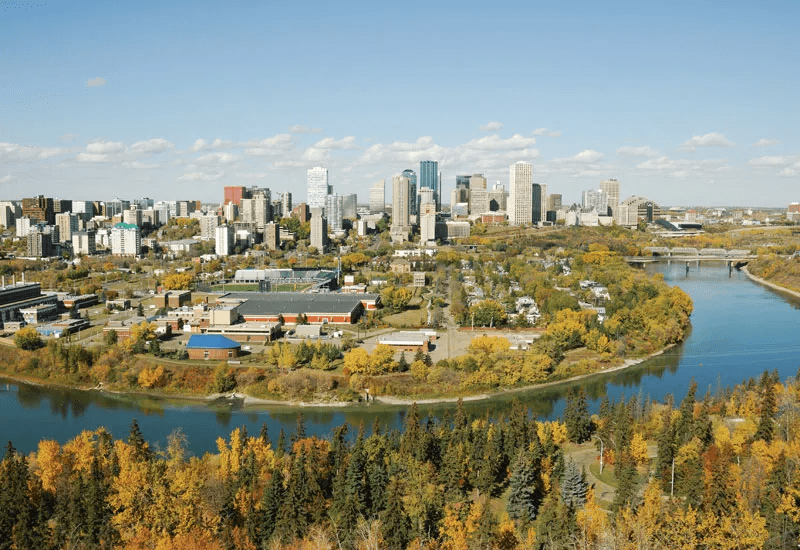
Modern-day Edmontonians are familiar with several key locations along the river. For example, the Abraham Reservoir in western Alberta, created by dam construction in 1972, stands out as a notable feature along the river’s route. The reservoir is 32 kilometers long and 3.3 kilometers wide, making it the largest body of water in Kootenay National Park in British Columbia.
Another iconic feature associated with the river is the Edmonton LRT rail bridge, introduced in 1978. This bridge was the first of its kind in Canada to accommodate light rail transit (LRT) when the city’s population was still below one million, demonstrating Edmonton’s forward-thinking approach to transportation.
A Home for Aquatic Life
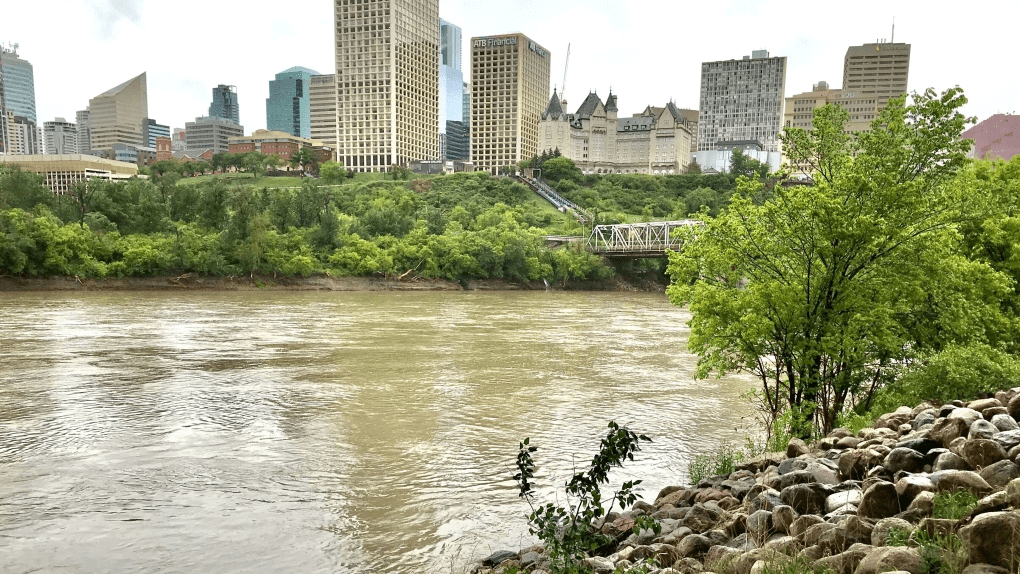
The river and its surrounding ecosystems are teeming with wildlife. Its waters provide a habitat for numerous species of fish, while the adjacent forests and wetlands support mammals and birds. This biodiversity has made the river a cherished natural resource, both for residents and for conservationists.
Environmental Challenges and Industrial Impact
Like many rivers around the globe, the North Saskatchewan River has faced challenges related to industrial development. Unfortunately, this includes pollution incidents that have had severe environmental consequences.
One of the most notable disasters occurred in July 2016, when a pipeline operated by Husky Energy spilled approximately 230,000 liters of oil into the surrounding waters. This spill impacted nearby ecosystems, with a portion of the oil reaching the river near Lloydminster. The incident disrupted local water supplies, forcing some communities to source water from neighboring towns until 2017. Although no similar disasters have occurred since, the event served as a stark reminder of the delicate balance required to protect this vital natural resource.
A River of Beauty and Responsibility
The North Saskatchewan River remains a symbol of natural beauty and historical significance for Edmonton and Alberta. While it provides breathtaking landscapes and recreational opportunities, it also serves as a reminder of the importance of environmental stewardship. From its glacial origins to its role in shaping Edmonton’s identity, this river continues to be an essential part of the province’s story. Let us hope that future generations will cherish and protect it as much as those who came before.