

Modern Edmonton handles waste with a focus on environmental sustainability, utilizing various eco-friendly methods. But rewind a century or so, and the picture was quite different. Back then, city dwellers often tossed their refuse right into back alleys. This quickly spiralled into a major problem, prompting the need for recycling and reuse initiatives. Scavengers and scrap dealers roamed the streets, collecting used cans, linens, and lumber. Whatever was left over? It was simply dumped off the riverbanks into the North Saskatchewan River, causing immense environmental damage, as reported by edmonton.name.
Waste Management in the Early 20th Century
In the early 20th century, Edmontonians had a rather unique approach to waste. Wastewater, ash, and garbage were treated as distinct categories, each handled differently. Ash, which included various types of burnt materials, was often reused, serving as a base for roads and sidewalks, or as crushed rock and gravel. It could also be used as compost or to mask the foul odour of other waste. Wastewater, on the other hand, was part of a rather circular economy, feeding the herds of pigs that roamed the city streets. Hotel and restaurant owners would even sell their wastewater to pig farmers. Garbage, it seems, was the most valuable waste stream at the time, containing rags, lumber, glass, and metals that could be salvaged for scrap or repurposed into other household items.
The prospect of reusing and recycling garbage led to the establishment of Edmonton’s longest-lasting settlement at the Grierson dump. Despite being one of the first Western cities in North America to develop a significant water infrastructure, Edmonton had no coherent waste management strategy. Large items were simply hurled from the hill near the Macdonald Hotel, left to tumble into the river valley. Many unemployed immigrants quickly realized they could salvage these materials to build their shanties and earn a living by finding valuable treasures amidst the refuse.
During the Great Depression, a reporter from the Edmonton Journal interviewed several residents who had lived at the dump for decades, earning around $2 a week. One Dutch immigrant named Smitty became particularly renowned for transforming trash into flowerpots and picture frames.
Waste at the Landfill
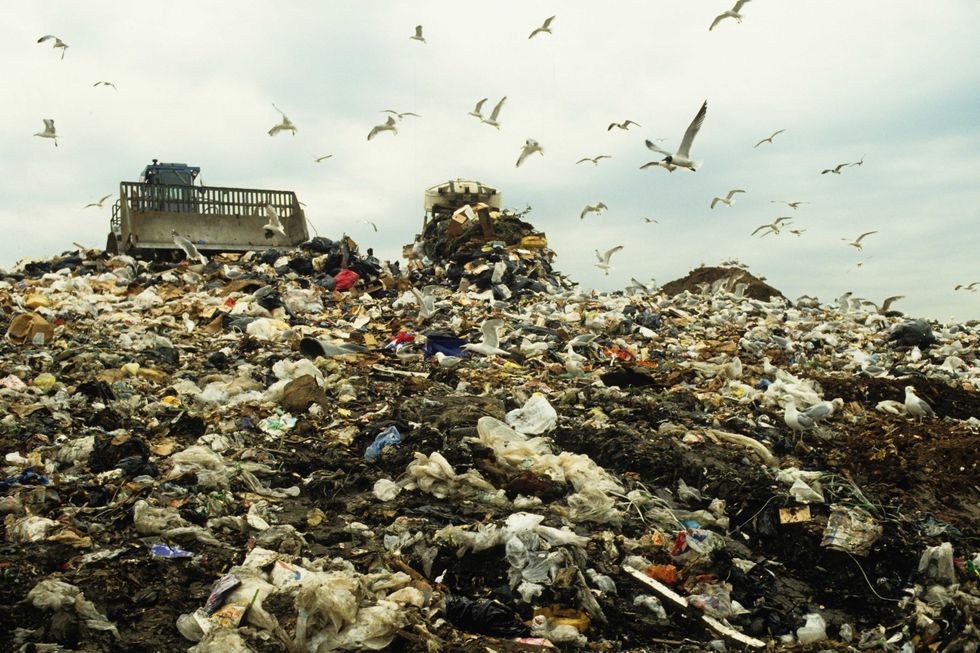
The Grierson dump wasn’t just a convenient place to discard unwanted items; it also served as a landfill that, according to the city’s engineering department, helped mitigate the riverbank’s dangerous steepness. The city engineer actually encouraged waste disposal at Grierson, even though the conditions there often drew the ire of the Health Department, Police Department, and Fire Chief. Residents of McCauley and Boyle Heights frequently complained about the constant stench, but were simply advised to keep their windows closed on hot days.
The growing landfill in the heart of the city led to a host of problems, and in 1915, the city commissioner made the first of many attempts to close it. Investigators dispatched by the North-West Mounted Police concluded that the dump was a breeding ground for various microbes dangerous to public health. Soon after, a municipal incinerator was built in the city.
In 1913, with the city’s waste problem escalating, a cholera epidemic swept through the pig population that fed on waste at the Grierson dump. This pandemic proved devastating and caused considerable anxiety among citizens who feared the epidemic would spread to humans.
Regardless, the pig plague led to the temporary closure of the Grierson dump for waste disposal. However, citizens continued to dump garbage there. In 1913, the Edmonton Capital newspaper published an editorial stating that people should sort their commercially valuable waste. At the time, waste collection was considered an important public service and remained an official city job until 1916, managed by the Street and Scavenging Department. Mr. Schunke, who held the position of City Scavenger at the time, blamed outsiders for the problems at the Grierson dump and urged city authorities to keep it open. Some citizens even proposed building a massive wall to separate Edmonton from its river valley dump, but this plan found no support.
Regulating Waste Disposal
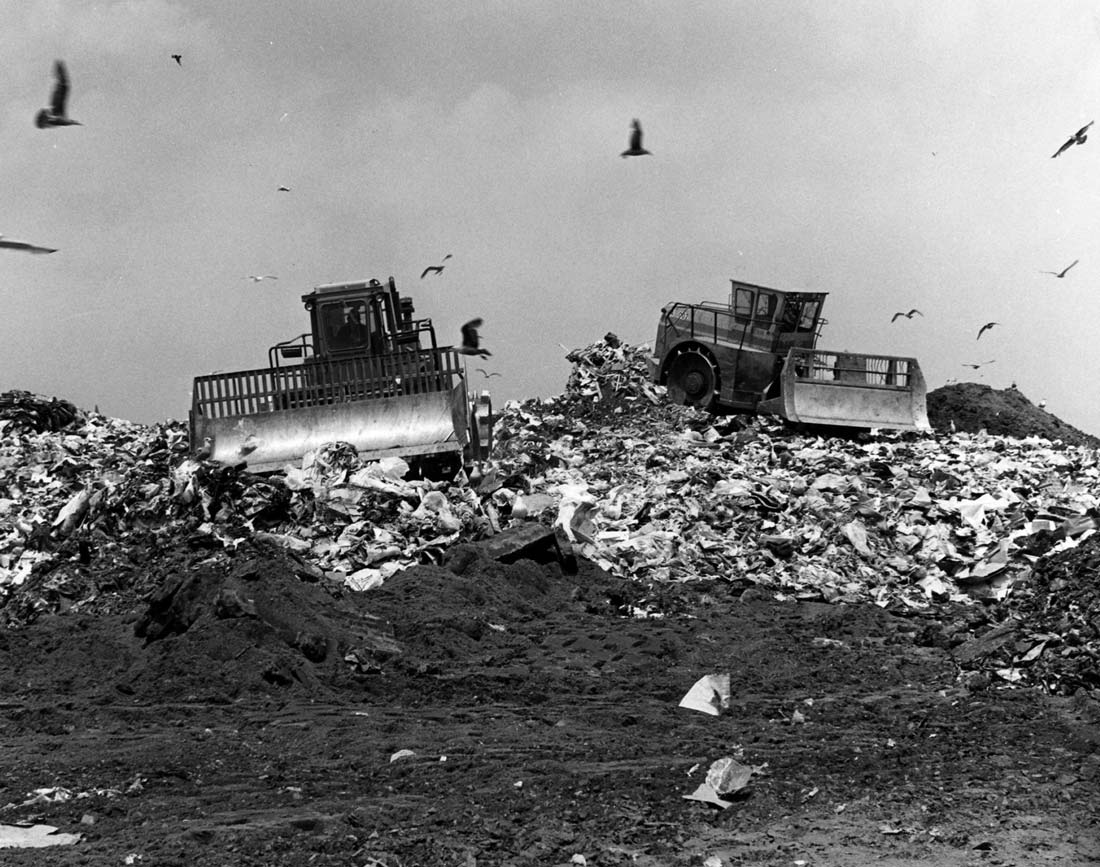
Debates surrounding waste collection and recycling continued in the city. In 1917, Edmonton passed an ordinance regulating garbage collection. Residents were limited to disposing of no more than 1 cubic yard or 100 pounds of waste per week. Furthermore, feeding pigs with waste was no longer permitted. City council members hoped that the ever-growing mountains of garbage on the riverbanks would eventually be dealt with by a large incinerator. However, its construction proved to be costly.
A similar proposal for an incinerator was put forward in Strathcona in 1911, where sanitary conditions were even worse than in Edmonton. Waste collection was entirely in the hands of scavengers. Strathcona residents were issued night soil buckets, and the practice of dumping these buckets in the alleys led to such a mess that the Board of Health strongly urged the city to stop and build sewage pipes. Meanwhile, city scavengers had to deal with waste by simply tossing it into pits in the streets.
In 1917, Edmonton’s mayor came up with an ingenious idea to hire workers to bury waste at the Grierson dump. These individuals would then cover the garbage with ash and transport manure further east into the river valley. As the city grew, the dump expanded westward, engulfing entire neighbourhoods.
Modern Waste Management
In 1986, Edmonton’s efforts in waste recycling truly began with the launch of the first curbside recycling pilot program. Over the years, this initiative grew significantly, and today, the Edmonton Waste Management Centre (EWMC) spans 550 acres.
The EWMC is North America’s largest waste management complex, boasting a unique combination of advanced production and research facilities that help the city achieve its goal of diverting 90% of municipal waste from landfills. This complex houses integrated processing and transfer facilities, composting operations, and the world’s first waste-to-biofuel plant.
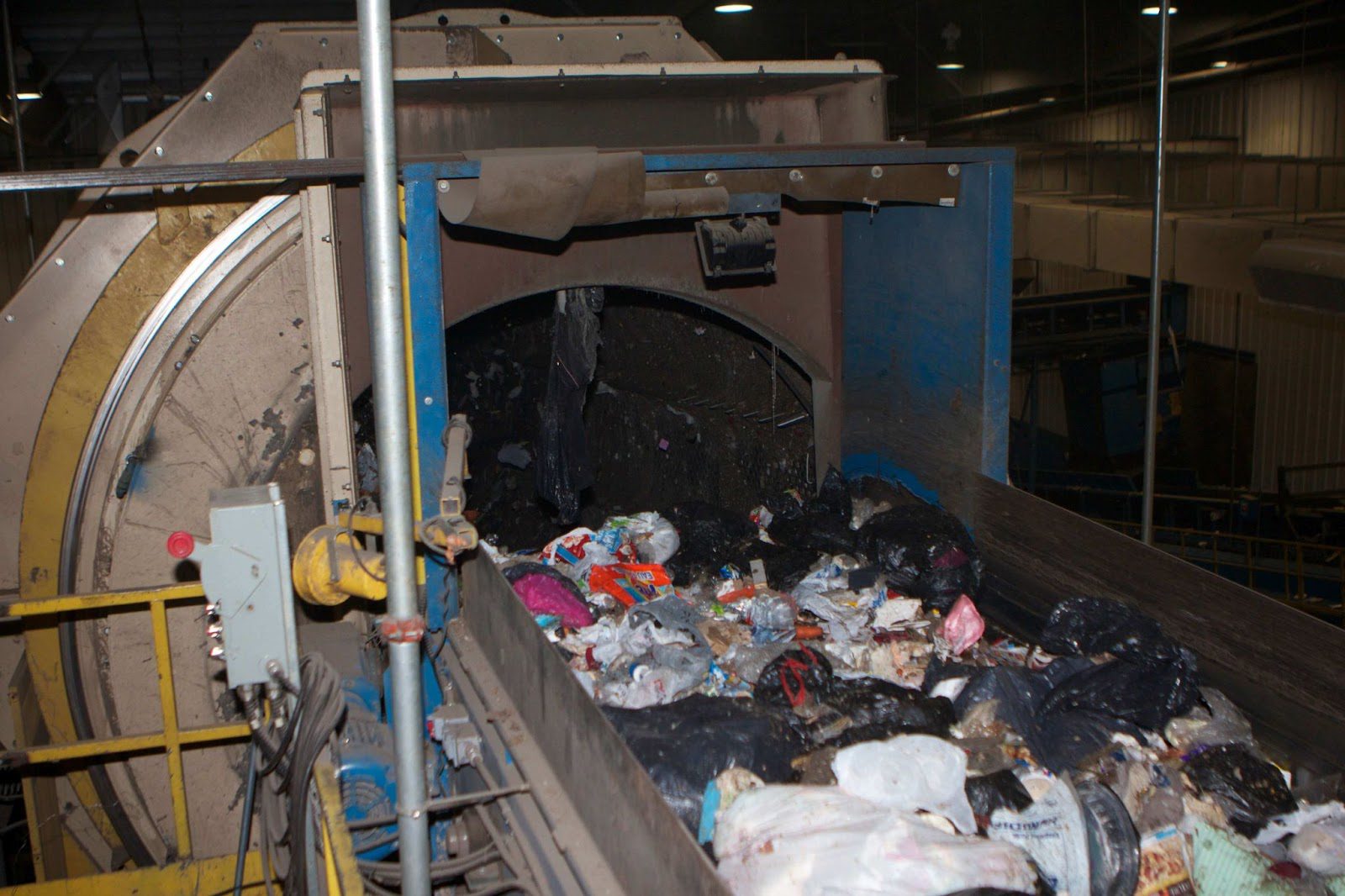
This centre processes waste from approximately a million people. Once here, materials are sorted, with some being composted and others converted into biofuel. It’s important to note that collecting and sorting municipal waste is no easy feat. In 2009, Edmonton closed the Clover Bar landfill, deciding instead to replace it with an integrated waste processing and transfer centre. Rather than continuing to send waste directly to another landfill, this complex allows the city to separate waste into three distinct streams: composting, biofuel production, and landfilling. To achieve this separation, the EWMC installed a state-of-the-art facility that enables manual material sorting.
Using screens with various aperture sizes allows for the sorting and sifting of materials as they pass through the machinery. Thanks to modern equipment, garbage and waste are processed to the highest standards. Inorganic components are sent to the waste-to-biofuel plant, which is the world’s first production-scale facility of its kind. It converts household waste into biofuel and biochemicals. Proper waste management creates a favourable ecological situation in the city and contributes to environmental protection.
