

The establishment of Notikewin Provincial Park in Alberta is a result of local residents’ interest in preserving nature and creating recreational spaces. This park boasts a rich history, making it a noteworthy destination for both tourists and locals. Notikewin Provincial Park belongs to the category of provincial parks, which are designated areas aimed at protecting nature, promoting recreation, tourism, and preserving local history. Learn more on edmonton.name.
Origin of the Park’s Name
The name “Notikewin” is derived from the Cree word meaning “battle” or “struggle.” This name reflects a historical event in the 1700s, when a battle took place between the Beaver and Cree tribes. The Beavers sought to drive the Cree out of the area, sparking a conflict.
In 1793, Alexander Mackenzie passed through the area during his journey to the Pacific Ocean.
By 1886, the Hudson’s Bay Company managed Battle River House on the southern bank of the Notikewin River. From 1903, steamboats navigated the Peace River for 50 years, transporting goods, hunters, settlers, and missionaries. For centuries before this, the river served as a lifeline for Indigenous peoples.
Natural History of the Park
Notikewin Provincial Park was officially established in 1979, covering an area of 97 square kilometers. It preserves a significant portion of northern Alberta’s quintessential natural landscape, which once consisted of vast forests of poplar and spruce interspersed with deep-flowing rivers.
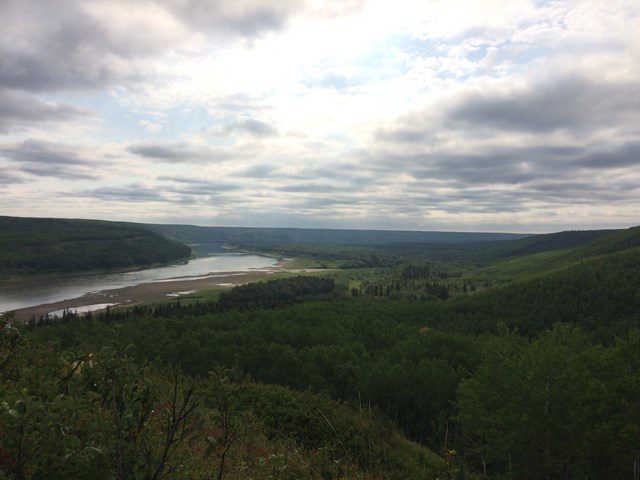
The park is located at the confluence of the Peace and Notikewin rivers, where deep valleys are carved up to 150 meters below the surrounding uplands by glacial drift.
Young aspen forests decorate the uplands, while river islands and riverbank flats feature self-regenerating old-growth forests of towering white spruce over 30 meters tall. These forests provide critical habitats for various species of wildlife and birds, such as woodpeckers, boreal chickadees, golden-crowned kinglets, owls, and warblers, including the orange-crowned and black-throated green warblers.
Rich alluvial plains in the park are home to balsam poplars and ostrich ferns, thriving in the forest soil. Additionally, the park includes a range of forest communities. Aspen, balsam poplar, and white spruce dominate the well-drained uplands, with pockets of birch scattered throughout.
This diversity of forest types supports habitats for more than 200 bird species. Notably, over 20 warbler species rely on the old-growth forests for nesting and raising their young, including black-throated green, bay-breasted, and cape may warblers.
The park is also home to 43 recorded mammal species. Commonly spotted animals include moose, white-tailed deer, black bears, coyotes, beavers, squirrels, and snowshoe hares. Occasionally, rarer species like lynx, river otters, wolves, or woodland caribou are also observed.
Notikewin Provincial Park for Visitors
Visiting the park in autumn is particularly recommended, as the landscape transforms into a golden kaleidoscope of aspen and poplar trees. During this season, flocks of sandhill cranes and Canada geese migrate through the area, stopping to rest on the sandy riverbanks and feeding on nearby grain fields.
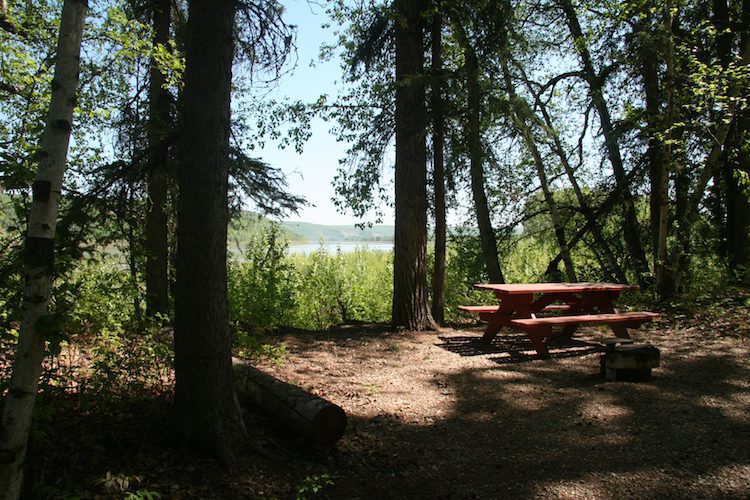
The park’s wooded areas make it an ideal location for camping. The Peace and Notikewin rivers offer picturesque views, opportunities for fishing, canoeing, and hiking.
Local residents often praise the park for its natural beauty and accessibility. Notikewin Provincial Park is free to visit, allowing people to enjoy its breathtaking landscapes and fresh air year-round. Visitors consistently express satisfaction with this hidden gem, which remains a haven for relaxation and exploration in Alberta.