

In Alberta’s capital, many entrepreneurs engage in the flower business, as it not only generates good income but also improves the local environment. Let’s take a closer look at who runs this business and how they do it on edmonton.name.
Stories of Successful Entrepreneurs
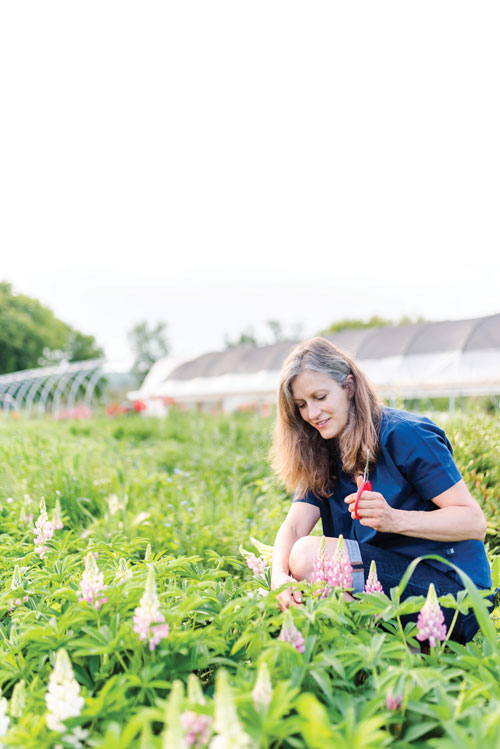
Heather Henson has a deep love for flowers, meticulously caring for and cultivating various species. In late January 2023, she planted 4,000 lisianthus seeds. She carefully nurtured these delicate plants, moving trays with heat mats and lamps daily to a small greenhouse on her deck. This dedication paid off after six months. Henson started her business in 2013, initially growing flowers in her backyard before expanding to a half-acre farm. According to her, there was barely any demand for cut flowers at the time, and she sought advice from two farmers in Saskatchewan. However, the situation has since changed—flower farming, particularly by small-scale growers supplying hyper-local markets, is on the rise in Alberta, providing an alternative to traditional floristry, a sector almost entirely dependent on imports.
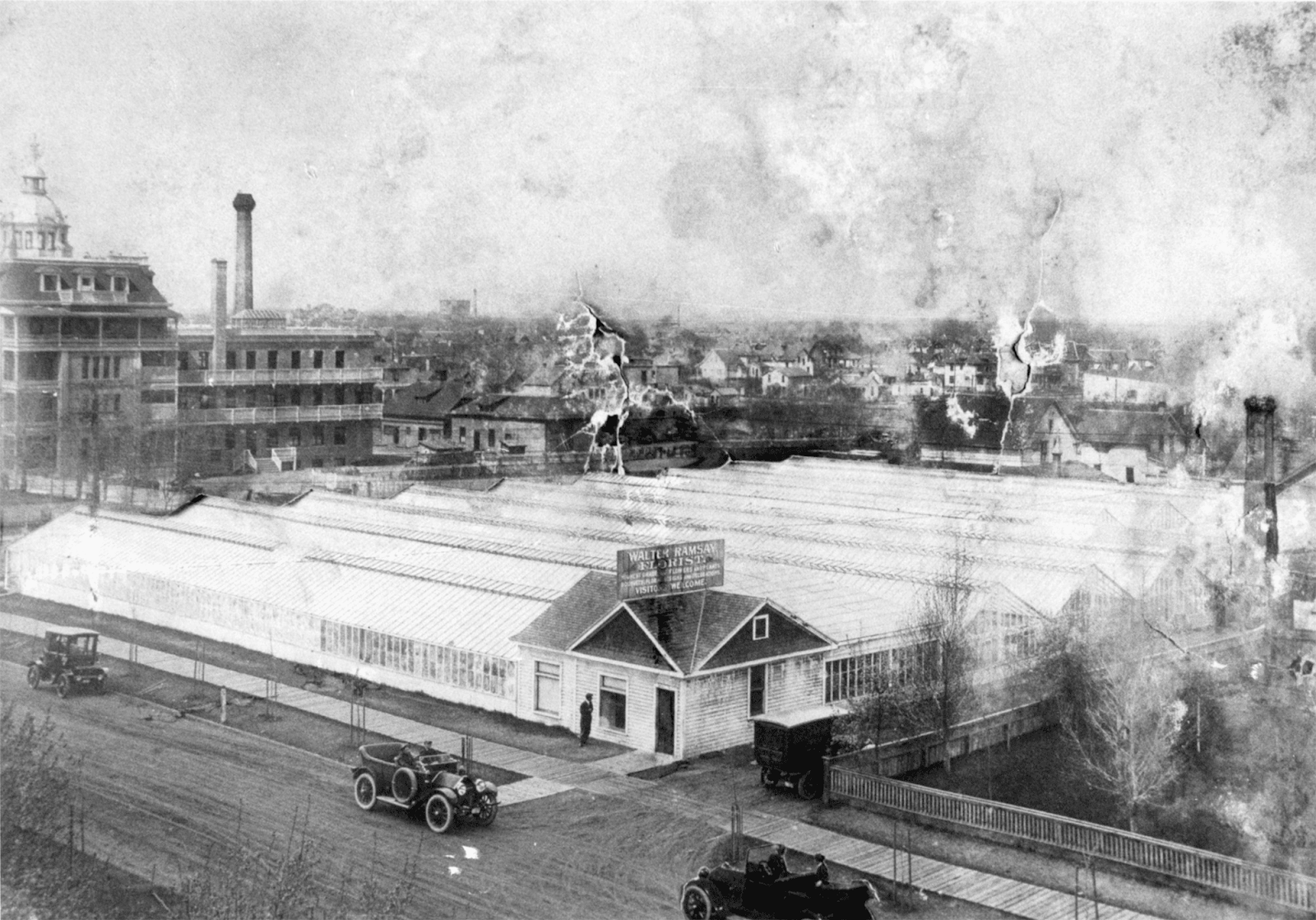
The prosperity of businesses supplying Alberta-grown flowers directly to local consumers is increasing each year. For example, in 1906, Walter Ramsey left his job as a school principal to take a chance on horticulture. He built nine massive greenhouses, each about three-quarters the length of a curling rink, in what is now downtown Edmonton. He cultivated roses, carnations, and chrysanthemums to supply his flower shop.
In Blackfalds, near Red Deer, “Central Alberta Greenhouses” spanned eight acres, growing flowers for seven retail flower shops. Established by Walter and Myrtle Good in the 1930s, the family-run floral business thrived for over 70 years, passing through three generations. Kim Wickwire, a retired horticulture instructor from Olds College, worked at one of the company’s retail stores in the late 1980s. She recalls that most flowers, including some roses, came directly from the farm.
Kim taught floriculture courses at Olds College starting in 1989, drawing from her personal experience in growing and selling flowers. The college’s horticulture program began in 1963 under Buck Godwin, who developed training programs to support Alberta’s floral industry. Godwin tested annuals and perennials for field and greenhouse cultivation and was always searching for foliage, including grasses and shrubs like sorrel, to add depth to floral arrangements. He became well known for his dried flowers and grasses, refining techniques to preserve color and shape, which he documented in the guide “Alberta Supernaturals.” After retiring, Godwin managed his own farm, supplying fresh and dried flowers to florists across Canada. Florists sought out his fresh flowers, traveling from Calgary and Red Deer to Olds weekly.
Ramsey, the Goods, Godwin, and other farmers who supplied seasonal flowers throughout the 1900s and early 2000s proved that Alberta’s farms could sustain Canada’s floral industry.
Imported Flowers in Alberta
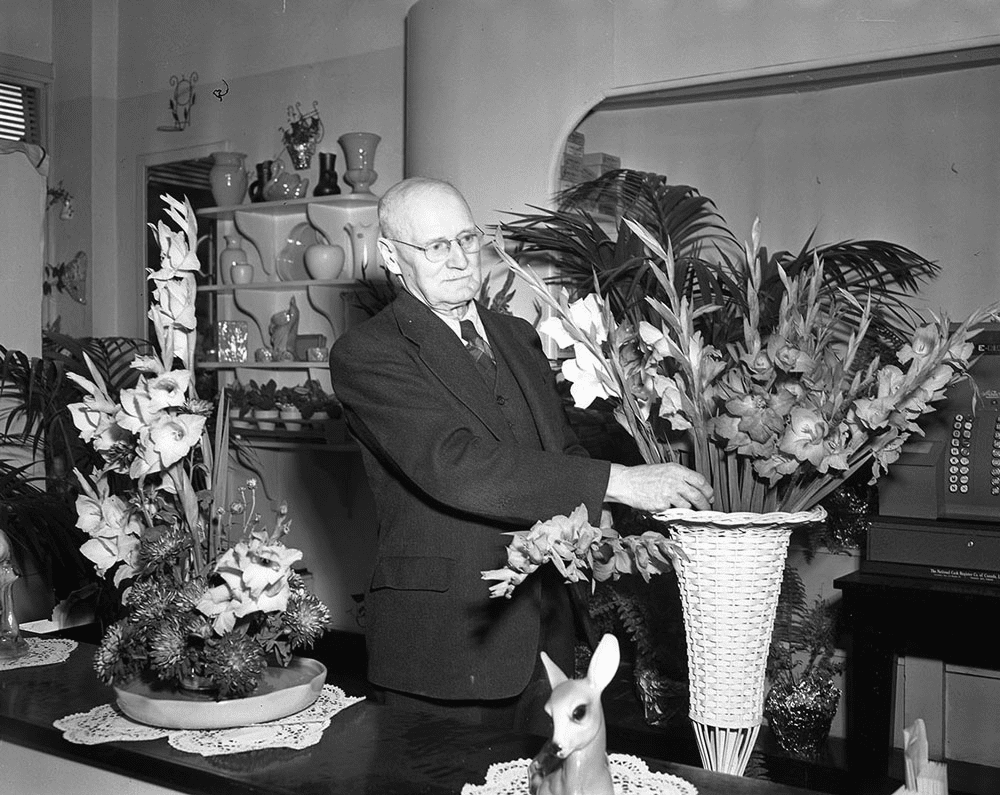
Imported flowers have been part of floriculture since the emergence of commercial flower shops. Ramsey imported some flowers for his Edmonton store. In Canada, flowers shipped from Colombia and Ontario helped extend the season for florists and added variety. These regions remain the country’s largest flower suppliers. Later, imports began arriving from California, Florida, and the Netherlands. Flowers were considered a luxury, and their price reflected this.
Significant changes came with the expansion of highway networks and advancements in air transport, allowing flowers to be transported over long distances. The flower industry saw the emergence of brokers, wholesalers, and transportation specialists.
While South American flowers were present in the industry as early as the 1980s, the 1991 U.S. Andean Trade Preference Act encouraged South American farmers to develop viable alternatives to coca cultivation. Various trade agreements followed. Today, approximately 30–35 fully loaded flights depart from Bogotá to Miami daily, a major North American flower distribution hub. From there, flowers are transported by truck or plane to wholesalers across North America. In 2021, Canada imported $123 million worth of cut flowers, with about 70% coming from Colombia and Ecuador, while the bulk of the remainder originated from the U.S. and the Netherlands.
The shift of a significant portion of the industry to South America—where daylight hours are longer, and labor is cheaper—has made it nearly impossible for Canadian growers to compete.
Local cultivation of carnations, roses, and chrysanthemums, valued for their longevity and diverse forms, has declined.
Rosalie Wezenberg, whose grandparents founded “Central Alberta Greenhouses,” witnessed these changes firsthand. In the late 1970s, her family ceased growing carnations, eventually resorting to ordering them from Colombia. The longest-lasting crop was roses, but even those were discontinued in 2004.
From all of this, it is clear that the flower business in Edmonton is thriving, and the demand for cut flowers continues to grow.