

No matter how much time has passed, “Black Friday” will remain etched in people’s memories. No other tornado in Alberta’s or Canada’s history has claimed so many lives or caused such extensive destruction. Let us explore that terrifying day, when a few minutes felt like an eternity. More on edmonton.name.
Tornadoes in Alberta
In the days leading up to July 31, 1987, Alberta residents experienced record-breaking high temperatures. Oppressive heat is not uncommon for the prairies, but this time it was compounded by extreme humidity levels of 70-80%, making conditions unbearable.
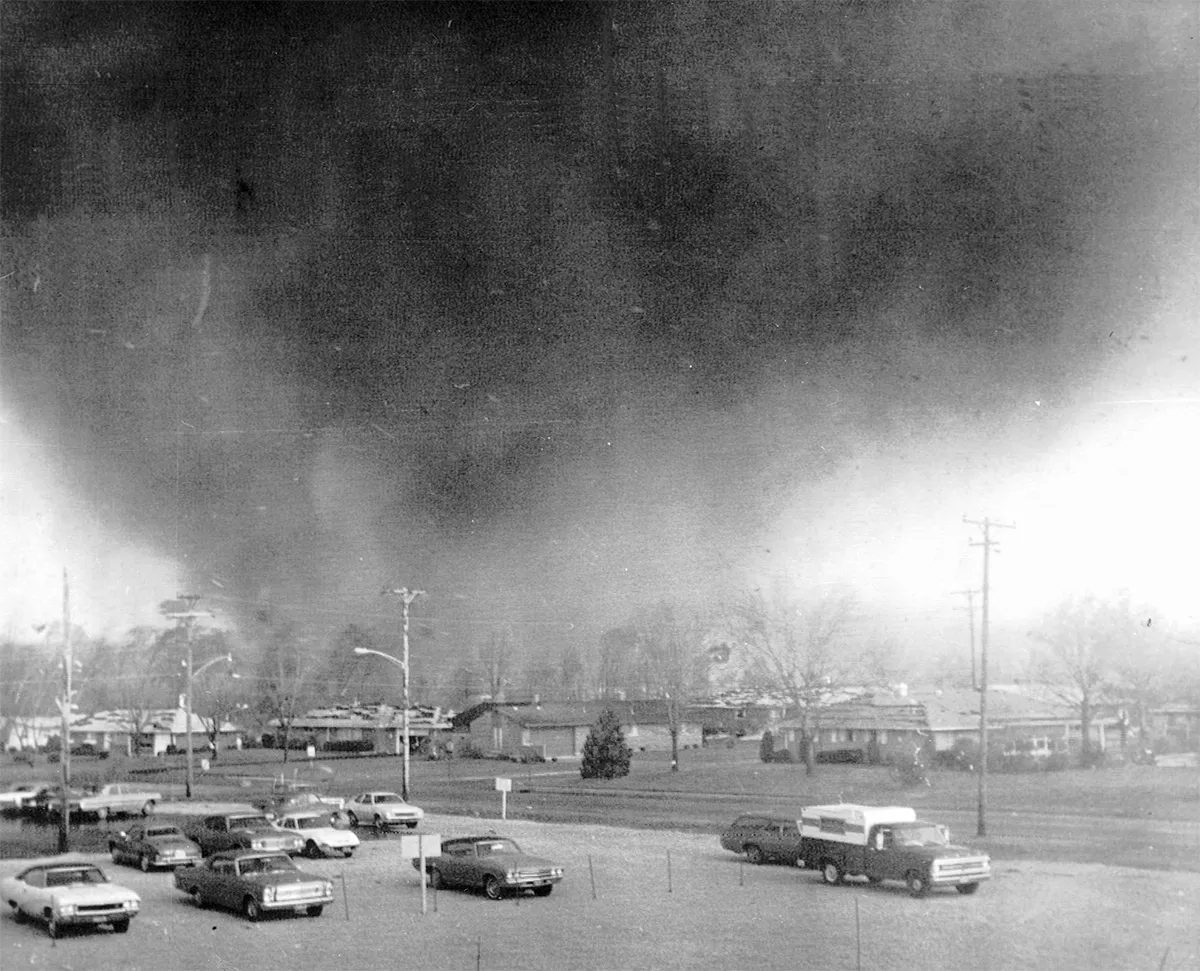
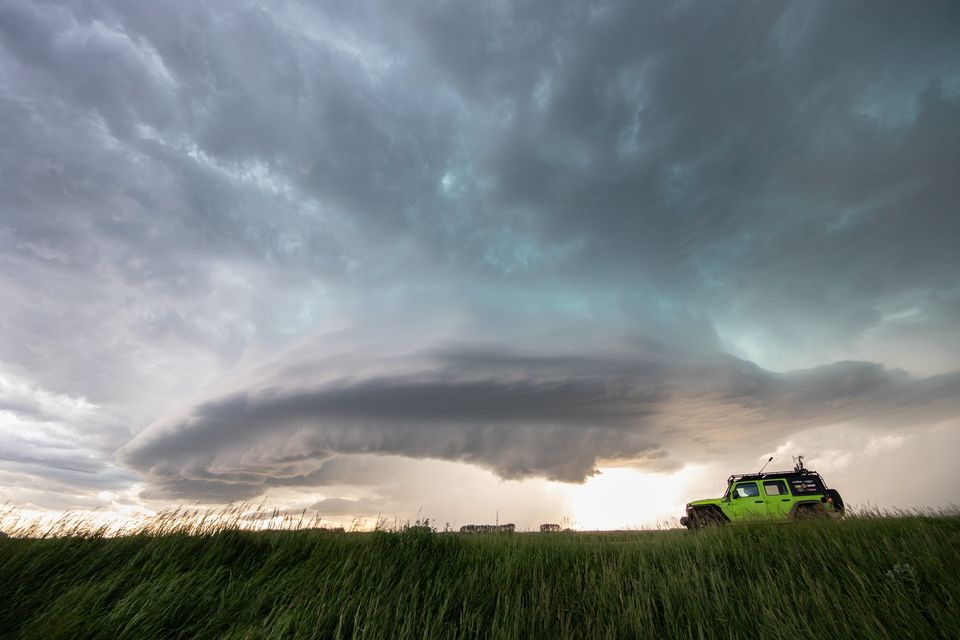
On July 31, 1987, at 6:00 PM, Alberta’s weather turned catastrophic. Temperatures dropped by 7°C, and humidity levels surged to 93%. Warm, moist air collided with a cold front moving in from the west, forming a vortex that quickly grew in size. At that moment, many people were sitting down for dinner, unaware of the disaster approaching.
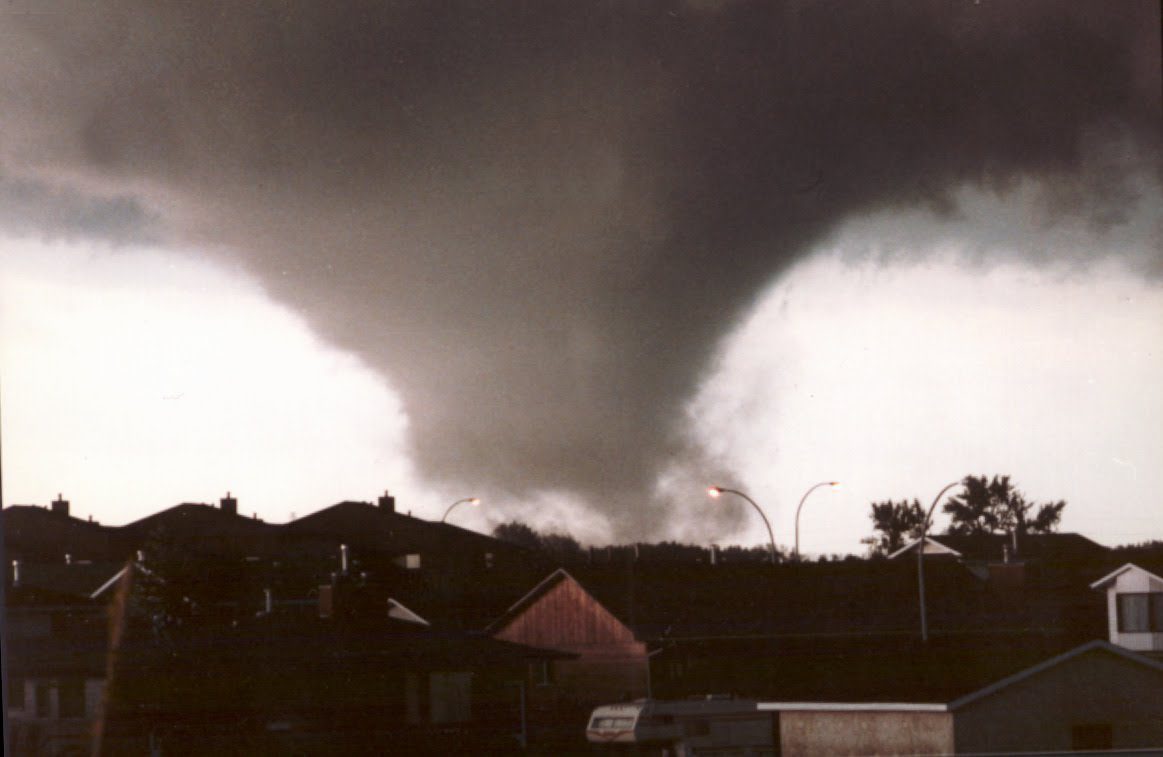
About 30 kilometers southeast of Red Deer, near Pine Lake, the sky turned ominously dark. Fierce winds, accompanied by heavy rain and hail, began to wreak havoc. The deadly tornado, measuring 500 meters wide, destroyed everything in its path—overturning boats, throwing vehicles, and snapping trees like matchsticks. Tragically, at least nine people lost their lives in Alberta, and over 130 sustained serious injuries.
Eyewitness Account: Rob Johnson, a teacher from Blue Ridge, was having a barbecue with his family at their lakeside cottage, about half a kilometer from the campground, when the tornado struck. He described hearing a deafening noise, resembling a jet engine, as water surged across the lake. While Johnson managed to survive, the destruction he witnessed was horrifying.
At the Green Acres seasonal resort, around 500 RVs were present, most of which were obliterated by the tornado. Winds of up to 300 km/h hurled several RVs into the lake, along with their occupants, who had to swim to safety. Many of the injured were rushed to local hospitals.
Early Warnings and Public Reaction
At 2:59 PM, meteorologists detected the initial signs of a tornado forming and spreading rapidly. Forty-five minutes before the storm struck, Environment Canada issued a severe weather warning, highlighting the possibility of a tornado in Alberta. Unfortunately, many people ignored these warnings, which proved to be a fatal mistake. It’s worth noting that Alberta had no history of such large-scale tornadoes before the mid-1980s, making this event particularly shocking.
The Tornado’s Path Through Edmonton
When the tornado reached the southeastern part of Edmonton, it appeared as a massive vortex. Passing through Mill Woods, it caused F2-F3 level destruction, damaging homes and infrastructure. Upon reaching the industrial area with its oil refineries, the tornado intensified to an F4 rating, toppling massive oil tanks.
Crossing Baseline Road and the North Saskatchewan River, the tornado maintained F2-F3 strength, causing significant damage to homes in neighborhoods like Kernohan, Bannerman, and Fraser.
Evergreen Mobile Home Park: The tornado delivered its most devastating blow here, destroying 200 mobile homes. Tragically, 15 people lost their lives, and many others were injured. Shortly after this destruction, the tornado dissipated.
Impact and Legacy
The Edmonton tornado of 1987 was one of the deadliest in Canadian history. It stayed on the ground for nearly 90 minutes, covering a path 19.1 miles long and up to 0.81 miles wide.
This disaster prompted the Canadian government to develop an advanced emergency alert system. In the early 1990s, Canada also introduced Doppler radar technology in response to the Edmonton tornado, enabling real-time storm tracking with greater accuracy than satellite imaging.
How to Stay Safe During a Tornado in Alberta
Tornadoes are powerful rotating columns of air stretching from storm clouds to the ground, sometimes reaching speeds of up to 400 km/h. They often develop in the late afternoon or early evening.
In Alberta, wind warnings are issued when speeds are expected to reach at least 70 km/h or gusts exceed 90 km/h.
Safety Tips for Tornadoes:
- Seasonal Awareness: Tornado and hail season runs from May to September, with a peak from mid-June to early August.
- Visual Cues: Tornadoes are hard to spot from a distance, and they don’t always form a visible funnel cloud.
- Direction of Travel: Tornadoes usually move from the south or west but can change direction unpredictably.
- Hail as a Warning: Large hail often accompanies severe weather, signaling that it’s time to take shelter.
- Illusion of Stillness: Tornadoes may appear stationary while actually moving toward you.
- Seek Shelter: If a tornado warning is issued, find a sturdy shelter immediately and stay there until the storm passes.
- If Caught Outdoors: Move to a low-lying area, lie flat on the ground, and shield your head from flying debris.
Stay informed by following local weather updates, listening to radio broadcasts, and adhering to government instructions. Ignoring warnings could put your life and the lives of your loved ones at risk.