

Historical evidence shows that knowledge of electricity existed long before the rise of the modern world. Ancient Greeks, Phoenicians, and neighboring civilizations were aware of its existence.
Over time, humanity made significant discoveries in this field, with numerous individuals contributing to the progress of electricity, which is now an essential part of modern life and society. More on edmonton.name.
Canada, Alberta, and Edmonton: The Emergence of Electricity
The full development of electricity in Canada began between the late 19th and early 20th centuries. Between 1890 and 1914, the capacity of all power stations grew from a modest 72,000 to over 2 million horsepower. A key driver of this period was the numerous discussions surrounding Niagara Falls, although it was not the sole factor.
Today, Canada is among the top countries in energy usage worldwide. In Alberta and Edmonton, a separate driving force led to the growth of electricity, a story centered around the Rossdale Power Plant.
Rossdale Power Plant: The Birth of Edmonton’s Electricity
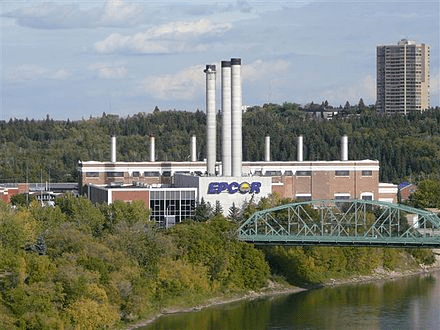
The Rossdale Power Plant, originally known as Edmonton Electric Lighting and Company, was built by Alex Taylor. In 1902, Taylor sold the station for $13,000—a symbolic sum by today’s standards—marking the official start of Edmonton and Alberta’s first power plant. However, the station’s full history began in earnest in 1932.
As its name suggests, the Rossdale Power Plant was located in the Rossdale district near the North Saskatchewan River. Its capacity significantly increased in the 1930s when a low-pressure plant, new energy blocks, and a pumping station were built. These developments enabled the plant to meet the growing electricity demands of the city and province.
Growth and Peak Performance
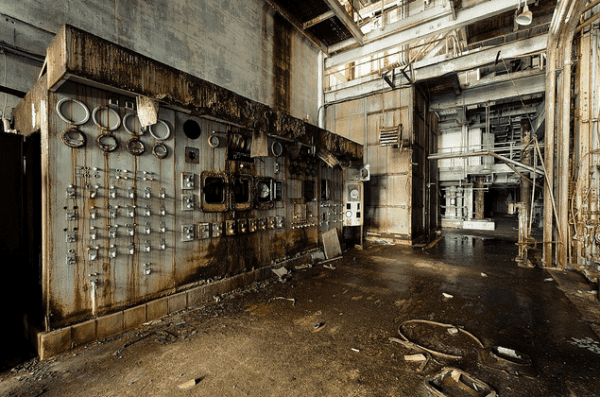
By the 1950s, Rossdale was considered the most powerful municipal power station in Canada. This status was achieved after the gradual expansion of the low-pressure plant in six stages, reflecting the region’s increasing need for electricity.
The station’s operation relied on two pumping stations, one built in 1937 and the other in 1955. While the fate of the second station remains uncertain, the first still stands in the North Saskatchewan River valley.
During its peak, the Rossdale Power Plant produced a quarter of Alberta’s total electricity. By the 1970s, the station had undergone further transformations, including the construction of a high-pressure plant and the launch of new energy blocks, allowing it to generate up to 400 MW of electricity.
The Decline of Rossdale
Despite its success, the station’s decline began in the 1970s. The low-pressure plant was decommissioned in 1993, and all gas generation equipment was dismantled.
In 2001, Rossdale Power Plant was officially declared a Provincial Historic Resource. Although there were efforts to maintain the facility, the last three generators were gradually decommissioned between 2008 and 2012.
Legacy and Future Possibilities
Most of the Rossdale Power Plant’s buildings remain intact today. Discussions periodically arise regarding the restoration of the site for functional purposes, but for now, the focus is on its role as a historical and tourist attraction.
The station officially ceased operations in 2012, marking the end of an era for Edmonton’s energy history.