

In early Edmonton, numerous factories stood out for their unique production technologies and global reach. One such factory was the Great Western Garment Company (GWG), which provided residents of Edmonton and beyond with stylish, high-quality clothing. Let’s take a closer look at its history and impact. Read more on edmonton-future.
Founding and Expansion of the Factory
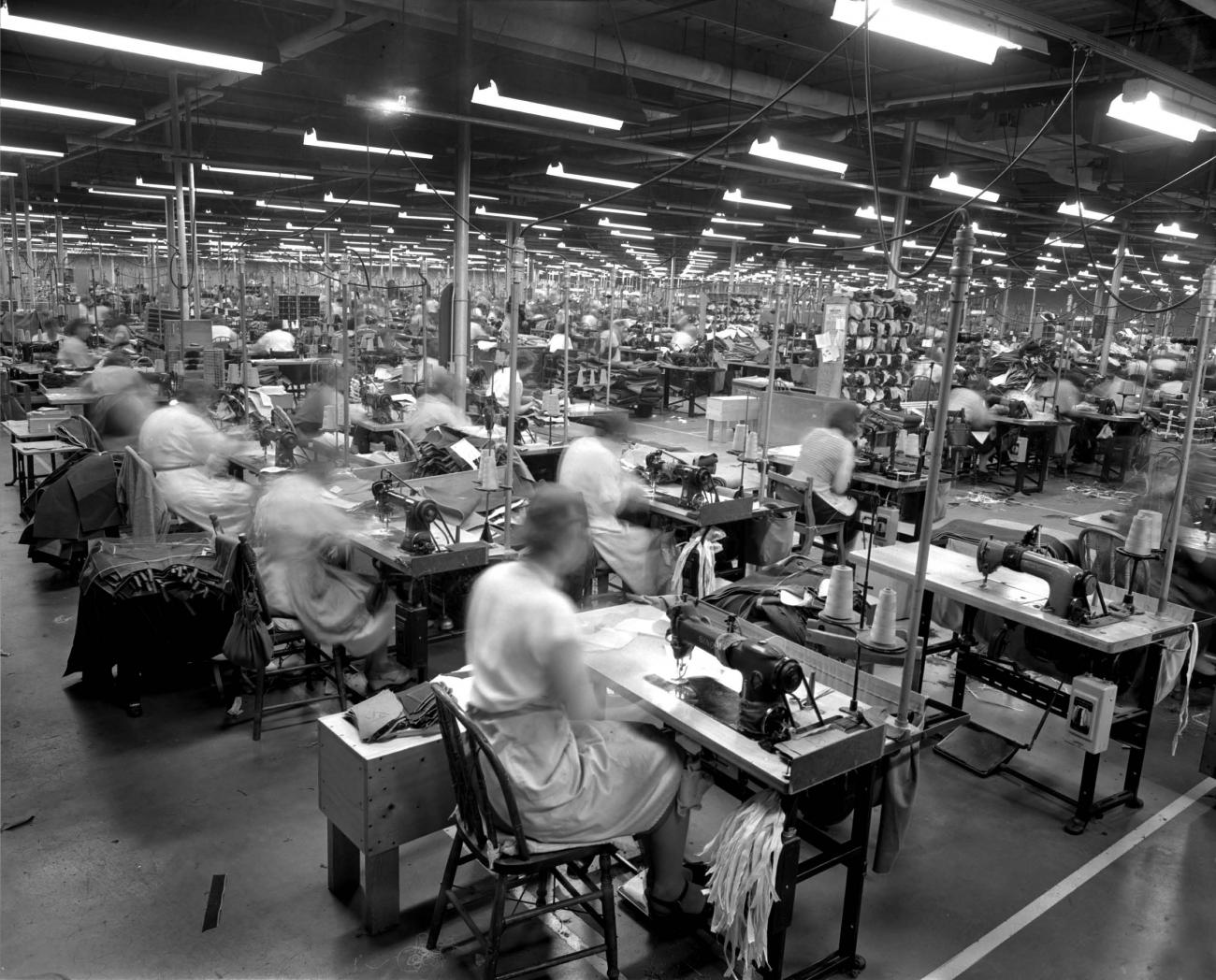
In 1911, Edmonton was thriving. Despite high real estate prices, new stores were rapidly opening across the city. Alexander C. Rutherford, Alberta’s first premier, and Alfred Jackson, a city councilor and owner of the Alberta Hotel, firmly believed in Edmonton’s future and founded the Great Western Garment Company. Their goal was to provide durable clothing for the province’s workers.
A few months later, seven employees established the United Garment Workers of America (UGWA) local organization, which quickly became a leading employer for women. At the time, job opportunities for women were scarce, especially for married women. By the end of its first year, GWG employed over 100 workers. In 1914, the factory relocated to Edmonton and expanded its workforce to 150 operators.
Between 1917 and 1953, the factory was located at the corner of 97th Street and 103rd Avenue, housed in a former department store built in 1911. By 1919, the company employed 375 workers, under the leadership of C. Graham. In 1925, investors funded a two-story addition to the north side of the factory, along with a fourth floor for the main building. By the late 1920s, GWG had expanded its operations to a second factory, increasing nationwide sales to $1.4 million.
The Factory During the Great Depression and World War II
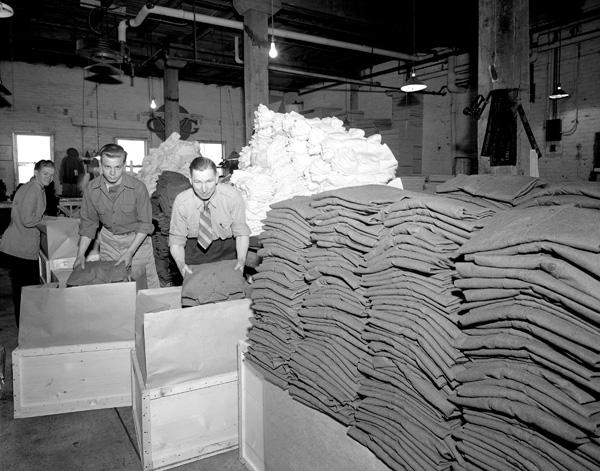
GWG owed much of its success to Clarence Jaycox, who served as the company’s director from 1931 to 1941. He introduced an assembly line system and encouraged piece-rate wages, which allowed the company to remain profitable during the Great Depression. During this period, GWG produced over 700 different lines of clothing, including women’s and youth apparel.
In 1935, with the economy showing signs of recovery, the company expanded its workforce from 250 to 300 employees. By 1936, as part of its 25th-anniversary celebration, GWG committed to providing long-term employment for its workers.
With the outbreak of World War II in 1939, two-thirds of GWG’s production was dedicated to fulfilling government contracts. After C. Graham’s passing in 1940, Clarence Jaycox took over as president. By 1941, government contracts had reached $1 million, and the workforce had grown to 500 employees. At the height of wartime production, GWG was manufacturing 12,500 uniforms per week. In 1942, a $125,000 two-story extension was added to the facility.
By the early 1950s, GWG relocated its operations to a larger facility on 97th Street. The new 100,000-square-foot factory included a 70,000-square-foot sewing workshop, designed by architect Ralph Brownlee. This move established GWG as the largest garment factory in North America.
Major Changes and Levi’s Acquisition
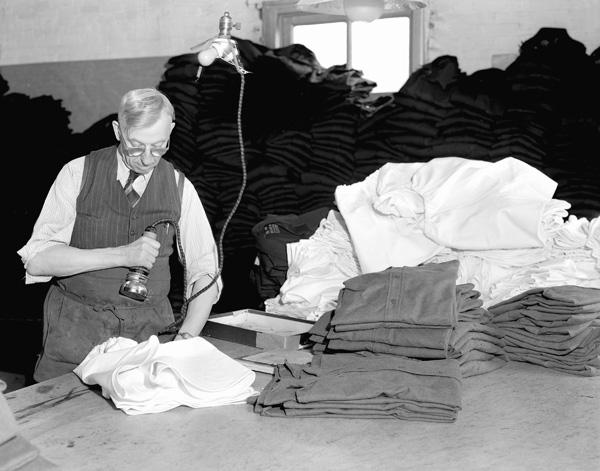
In 1958, following Clarence Jaycox’s death, J. Godso from Toronto took over leadership. Under his management, GWG expanded its product line to include casual wear for the entire family and extended its distribution network across Canada. By 1961, GWG apparel was sold by 5,500 retailers. The company also continued to produce garments for popular brands such as Red Star, Texas Ranger, and Iron Man.
Starting in the 1940s, GWG invested in engineers to streamline production. Under Jaycox’s leadership, the factory became one of the world’s most technologically advanced garment manufacturers, integrating new machinery and production techniques. By the 1960s, GWG employed in-house engineers to optimize production efficiency, teaching workers how to minimize energy use and maximize output. Eventually, nearly all manufacturing processes were fully automated, reducing the time needed to produce a pair of jeans to just 7.5 minutes by the time the factory closed in 2004.
In 1961, Levi Strauss & Co. acquired 75% of GWG’s shares. Peter and Walter Haas joined GWG’s board of directors, but the company maintained independent management until 1986. At its peak, GWG was one of Alberta’s largest industrial employers, with 950 operators working day and night shifts, increasing production by 10%. Daily output rose from 8,000 to 13,000 units.
In 1965, GWG partnered with the Government of Alberta and the Northern Alberta Institute of Technology to train unemployed and low-income citizens. Trainees received a minimum wage, with half of their salary subsidized by the government.
By 1971, GWG officially changed its name to GWG Limited, and in 1972, Levi Strauss purchased the remaining shares. GWG became a subsidiary, maintaining Canadian management and its head office in Edmonton.
Closure of the Edmonton Factory
By the early 1980s, operations were shifting. In 1982, Great Northern Apparel Inc. was formed, and 50 Edmonton-based office workers were laid off as management moved to Toronto. In 1984, additional job cuts followed as garment finishing operations moved to Brantford, Ontario. By 1999, GWG’s leadership considered closing the Edmonton factory, as the company now operated 11 plants across North America.
Finally, in March 2004, GWG shut down its Edmonton operations, leaving 448 workers unemployed. This closure marked the end of an era for the city. Throughout its history, GWG was a pioneer in manufacturing innovations. In 1917, its Local Union No. 120 became the first garment workers’ union in North America to implement an eight-hour workday and a 40-hour workweek.
GWG also led in product innovation. In the 1920s, it became the first Canadian company to use pre-shrunk denim. In 1965, it introduced Nev’R Press, the first permanently pressed pants in Canada. Then, in 1972, GWG launched Scrubbies, the original pre-washed jeans, invented in Edmonton by Vice President of Merchandising Don Freeland.
The closure of GWG’s Edmonton factory was a significant loss for the city, marking the end of a century-long legacy in innovative garment production. From its early roots in worker protection to its pioneering efforts in textile technology, GWG’s influence extended beyond Edmonton, shaping Canada’s garment industry. Though the factory is no longer in operation, its impact remains a key chapter in Edmonton’s industrial history.