

Scientific evidence indicates that the global climate is changing rapidly and is expected to change even more significantly in the near future. Urban buildings, responsible for nearly 50% of greenhouse gas emissions, are a major contributor to this phenomenon. In 2022, Edmonton’s municipal government approved a new sustainability policy addressing climate change. This initiative includes constructing buildings with net-zero emissions powered by solar panels. More details on edmonton.name.
How Do Solar Panels Work?
Solar panels harness the sun’s energy, converting it into usable electricity for electronic devices and household appliances. One significant advantage of solar energy is its ability to generate carbon-free, clean power.
Excess energy not consumed by electronics and appliances is exported to the local power grid, providing electricity to other homes.
The First Solar Panels on an Edmonton Home
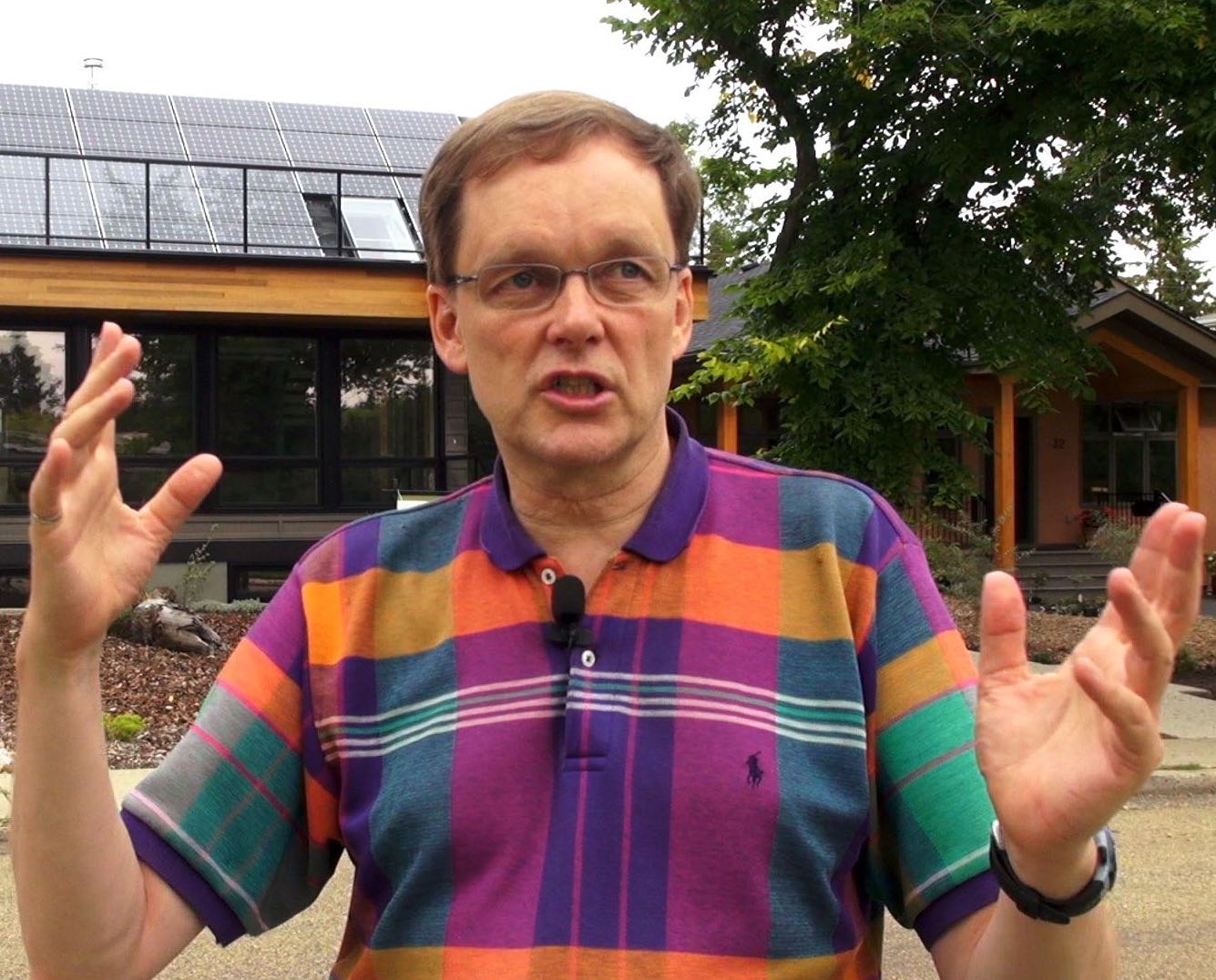
Gordon Howell began studying solar energy mechanisms in 1977. Motivated by a desire to improve the world, he closely observed Canada’s early solar energy projects. As an electrical engineer and a researcher at the Alberta Research Council, Howell focused on solar energy innovations. In 1979, he founded a renewable energy group at the University of Alberta.
In 1995, Edmonton Power invited Howell to participate in a groundbreaking project to study grid-connected solar energy systems. Howell became the first Edmontonian to install solar panels on his rooftop, spending over $40,000 on the system.
The solar energy system on Howell’s home was connected to Toronto’s grid and consisted of a solar panel array facing south. These panels collected sunlight and generated direct current (DC) electricity, which was converted to alternating current (AC) by an inverter. This energy was used not only by Howell’s household but also by his neighbors.
The Edmonton Power pilot project proved successful. However, for over four years, no one else installed similar systems due to the high costs. It took 28 years for the city and residents to fully recognize the importance of transitioning to solar energy.
Edmonton’s Transition to Solar Panels
Modern Edmonton has set ambitious goals: achieving corporate carbon neutrality by 2040 and net-zero community greenhouse gas emissions by 2050. This means most buildings in the city will rely on solar panels to produce electricity, significantly reducing CO2 emissions.
Equipping buildings with solar panels requires extensive planning. Factors such as shading from vegetation or neighboring structures need to be considered, as they can impact the system’s efficiency. Additionally, changes to the National Building Code will address increased snow and wind loads on buildings with solar systems.
Currently, Edmonton has four facilities equipped with solar panels, each with a capacity of 320 kW. Together, these facilities generate 330 MWh of electricity annually and prevent over 190 tons of CO2 emissions.
The city has initiated planning for 10 additional projects. Solar panels will be installed at a community recreation center, the Clareview Library, four fire stations, and five municipal buildings. Additionally, all new buildings in the city are expected to include solar panel installations.