

The first robotic dairy farms in Alberta emerged long ago and have rapidly developed since then. These farms feature state-of-the-art equipment designed to minimize human involvement and produce the highest quality milk. Edmonton is no exception in adopting and advancing robotic milking systems.
Graham Jespersen lives in the Stony Plain area, where his farm resembles many others. The farm includes several modern facilities: a large barn equipped with the latest dairy technology and advanced machinery for fieldwork. Learn more on edmonton.name.
Farming – A Family Tradition
The Jespersen family has been farming for over 100 years. The modern farm raises 150 head of cattle, and Graham also cultivates 3,400 acres of land for growing wheat and barley.
The farm was originally founded by Graham’s grandfather, who moved to Alberta in 1903. The first farm was mixed-use, raising pigs, chickens, and cows. Graham’s grandfather was the first in Stony Plain to sell dairy products directly to Edmonton.
When his grandfather passed away in 1945, the family farm was handed down to Graham’s father, Ralph. Ralph adopted some of the first technologies to make dairy farming more efficient. He was among the first in Stony Plain to use milking machines and cooling tanks, which made it easier for farms to store fresh milk.
In 2004, Graham became the farm’s owner and began modernizing Jespersen. Thanks to computer technology, the farm now tracks the productivity of each cow, providing valuable information about milk yield and the levels of fat and protein in the milk.
How Cows Are Prepped and Milked
Graham considers the robotic milking system the most important technological innovation on his farm. The milking robot operates on a “voluntary” system, meaning cows decide when and how often they want to be milked. Some systems are programmed to require cows to be milked before they can eat.
The robots replaced manual milking, which was labor-intensive and required cows to be milked in groups at set times each day. Graham and his team no longer have to wake up at 3 a.m. to milk cows.
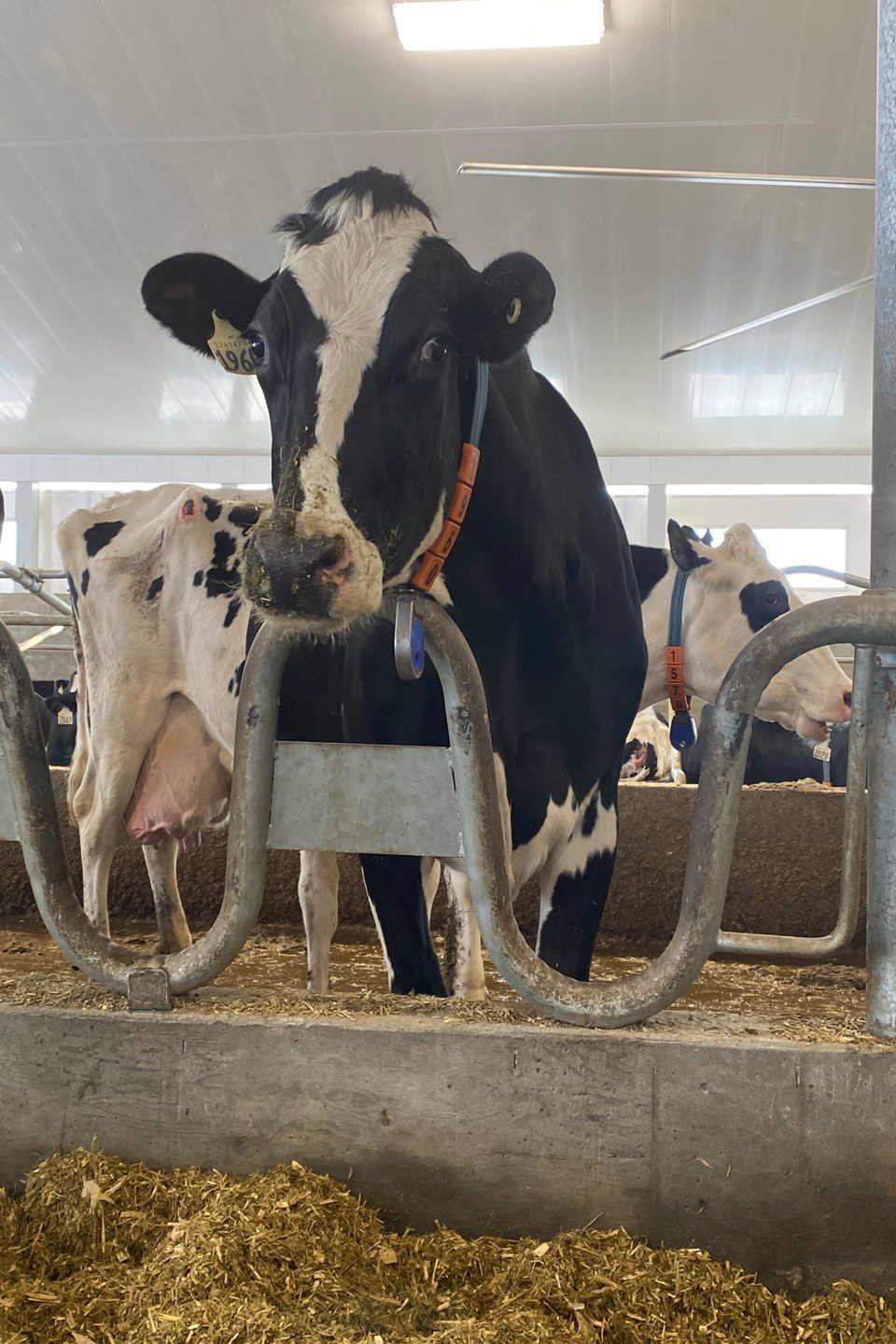
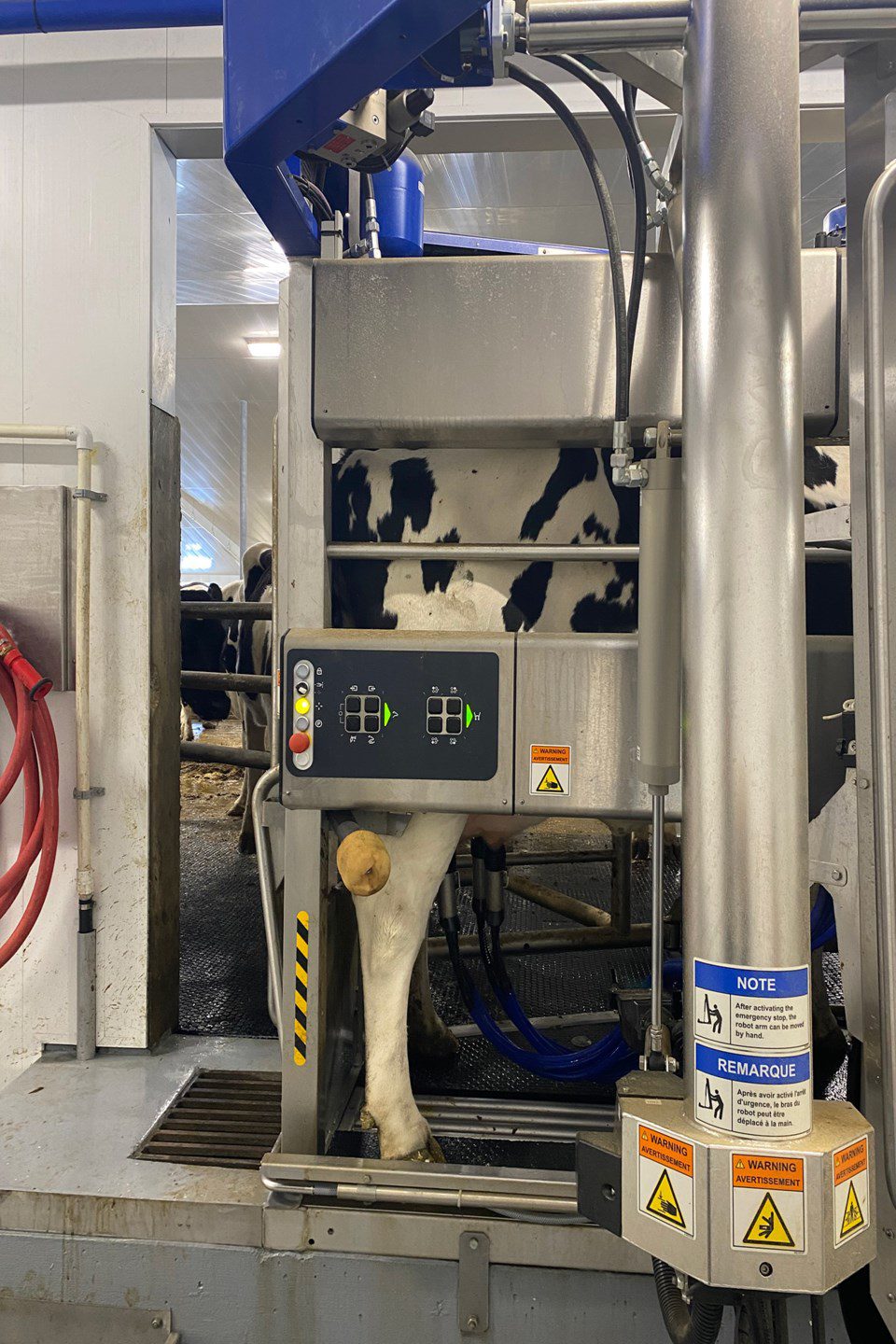
Now, the process is much simpler. Each cow wears a tracking device around its neck. When the cow approaches the milking station, the device is scanned, and the milking stall opens, allowing the cow to enter. The robot, equipped with a small camera, cleans the udder and attaches the milking cups. The operation is carefully timed to ensure proper preparation. The udder is cleaned for 45 seconds before the cups are attached.
During milking, the cow is given small molasses pellets to stimulate increased milk production.
Inside the robotic stall, a mini-laboratory operates in real time, checking the milk’s quality and detecting any signs of mastitis. Once milking is complete, the cow returns to its pen. The robot completes the process quickly and efficiently.
Benefits of the Robotic System
Graham explained that the more frequently a cow is milked, the higher the milk yield. On his farm, productivity ultimately depends on the cows themselves, and consistency is key to maintaining their health.
With the robotic system, milk production per cow has increased by 5 liters per day. Another benefit is the ability to customize milking speeds for each cow.
Building on a strong reputation and commitment to innovation, farmers like Graham invest in automation, improving livestock health and addressing labor shortages.
Graham highlighted the value of cow tracking systems, especially for monitoring animal behavior. These innovations ensure a healthier, more efficient, and sustainable dairy farming operation.