

In 1947, an oil company drilling for oil in the Lindbergh area of Alberta discovered not just oil, but a significant natural gas deposit and a substantial salt layer over 200 feet thick. This discovery led to the establishment of the Alberta Salt Company, a project supported by three prominent Alberta-based oil firms. Local government played a major role, providing key financial backing for the project. More on edmonton.name.
The First Salt Plant
Construction of the Canadian Salt Plant in Lindbergh began in 1947, immediately after the salt layer was found. By 1948, the plant was completed, but its official opening was delayed until March 19, 1949. Local newspapers reported that ministers, business leaders, and editors from across Alberta attended the grand opening, traveling from Edmonton on a special train. The event also drew many townspeople and villagers.
The opening revealed that the plant’s construction cost exceeded $1 billion. G. Williams was appointed the general manager, headquartered in Edmonton. Bert Ayres became the plant’s superintendent, with Alec Vainess as the foreman.
In 1951, a new salt company was formed. Within three years, Sills became the plant director, followed by John Williams in 1956, who held the position for many years.
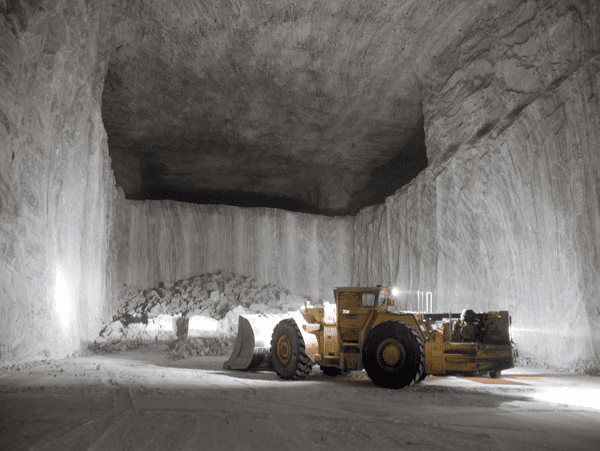
Active Salt Mining Operations
The salt deposits lay 2,600 feet below ground. The extraction process involved dual-casing wells. Water was injected into the salt deposit through the outer casing, dissolving the salt into brine. The heavier brine settled to the bottom of the cavity and was displaced to the surface via the inner casing under water pressure. The salt was then separated by evaporating the water.
A method for refining the salt into blocks was also developed at the plant. This innovation made Canadian Salt Co. the first factory in the world to produce salt on a large scale. A significant portion of the daily salt production was sold under the “Cascade” brand.
The plant had a significant impact on Elk Point and surrounding communities. At its peak, it employed 100 workers and contributed greatly to the region’s economy. While salt production has decreased since those years, it remains a vital industry in this part of Alberta.
Salt Production in the 21st Century
In the 21st century, Ken Palamerek became the plant’s manager. Long-term employees included Fred McAlis, who worked there for over 40 years, and Raymond Hammond, who served for 43 years. For many years, salt produced by Canadian Salt Co. was transported primarily by rail across the globe. Today, large freight companies handle the distribution.
The Elk Point Museum houses three unique salt samples: one from limestone, one iodized, and one pure white salt. These samples were collected during the plant’s inauguration and were the first extracted from the unique salt well.
Many other core samples from the salt well contained tiny marine shells. Scientists suggest that this indicates the area was once part of a vast sea or saltwater body hundreds of thousands of years ago. Estimates suggest the deposit contains enough salt to supply all of Canada for the next 2,000 years.