

The forestry industry has long been a cornerstone of Alberta’s economy, with the region’s vast forests offering an array of resources. Every year, new tree species appear in the province, prompting people to increasingly utilize wood for furniture, construction, and other needs. Below, we explore the history of forestry in Alberta and the innovative ways wood has been used. More on edmonton.name.
The Dawn of the “Wooden Era”
The utilization of wood in Alberta dates back to the arrival of trees in the region approximately 11,000 years ago. Early inhabitants spent countless hours gathering and chopping wood for cooking and heating their homes. As time passed, wood became integral to building structures, creating tools, and developing transportation networks. To this day, forestry continues to shape Alberta’s identity.
Tree Growth in Alberta
Central and northern Alberta provide the ideal temperature and moisture levels for tree growth, with forests covering over 60% of the province. While rainfall is critical for trees, Alberta’s dry summers pose challenges. Most natural forests in the province have existed for around 100 years.
Alberta’s forests consist of two main tree types: deciduous and coniferous. Deciduous trees, which grow faster, dominate southern forests, while coniferous trees, with their longer growing seasons, thrive in the cooler northern regions, particularly in the Rocky Mountains. Each type has various subspecies uniquely adapted to specific environmental conditions. Alberta’s diverse latitudes and elevations contribute to a rich array of forest ecosystems.
The province’s cold climate promotes slow tree growth, resulting in dense and durable wood, which has historically been a valuable resource for construction and tool-making.
The Role of Forestry in Alberta’s Development
By the 1800s, unique environmental conditions enabled the growth of homesteading and forestry, fostering the development of Alberta’s key industries. These early advancements laid the foundation for the province’s modern forestry sector.
Indigenous Knowledge and Forestry
For thousands of years, Alberta’s First Nations communities actively managed forests using controlled burns to encourage new growth. Wooden tools and structures were essential to their survival, with snowshoe frames and sleds relied upon in winter, and birchbark canoes used in summer. First Nations people carefully selected tree species suited to specific purposes and shaped forests to meet their needs.
Historical accounts reveal that Indigenous communities in Edmonton’s forests often traveled over 100 kilometers to find suitable timber for building structures.
Early Settlers and Woodworking
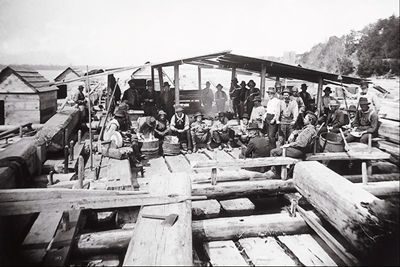
Early settlers in Alberta utilized wood primarily for construction, with sawmills emerging in southern Alberta by the 1880s. The railway boom necessitated significant wood resources, with 3,000 ties required for every mile of track. Wood was also used to build trestles, bridges, and railway stations.
The advent of railways revolutionized Alberta’s forestry industry, spurring increased logging activity but also causing widespread fires from sparks and engine emissions. These fires shaped not only Alberta’s landscape but also that of Canada as a whole.
Sawmills were in high demand in both northern and southern Alberta. By the 1890s, sawmills operated in Fort Chipewyan and Fort Vermilion. Many farmers also harvested and milled their own wood for personal use.
Forestry Challenges for Early Farmers
Farmers in northern Alberta benefited from easier access to forests, though clearing trees from their land to cultivate fields posed significant challenges. Aside from construction, wood was also a crucial resource for heating. Each household needed approximately 100 trees annually for heating and cooking purposes.
Conclusion
The forestry industry has been a fundamental part of Alberta’s history, providing essential resources and shaping the province’s economic development. Today, Alberta’s forests continue to support a thriving industry while offering a glimpse into the province’s rich natural heritage.